

 ·
9 minute read
·
9 minute read
Every business has goals. Increase revenue. Improve customer retention. Launch a new product. Expand into a new market. Increase activation. Reduce operational costs. But there is a question that is often harder to answer:
How does the work happening today contribute to those goals?
A strategy might be clear to leadership. The goals might be documented. The KPIs might be tracked. And teams might still spend their days working on tasks that feel disconnected from the bigger picture. The solution is not necessarily to create more goals, more dashboards or more meetings. It is to create a clear connection between:
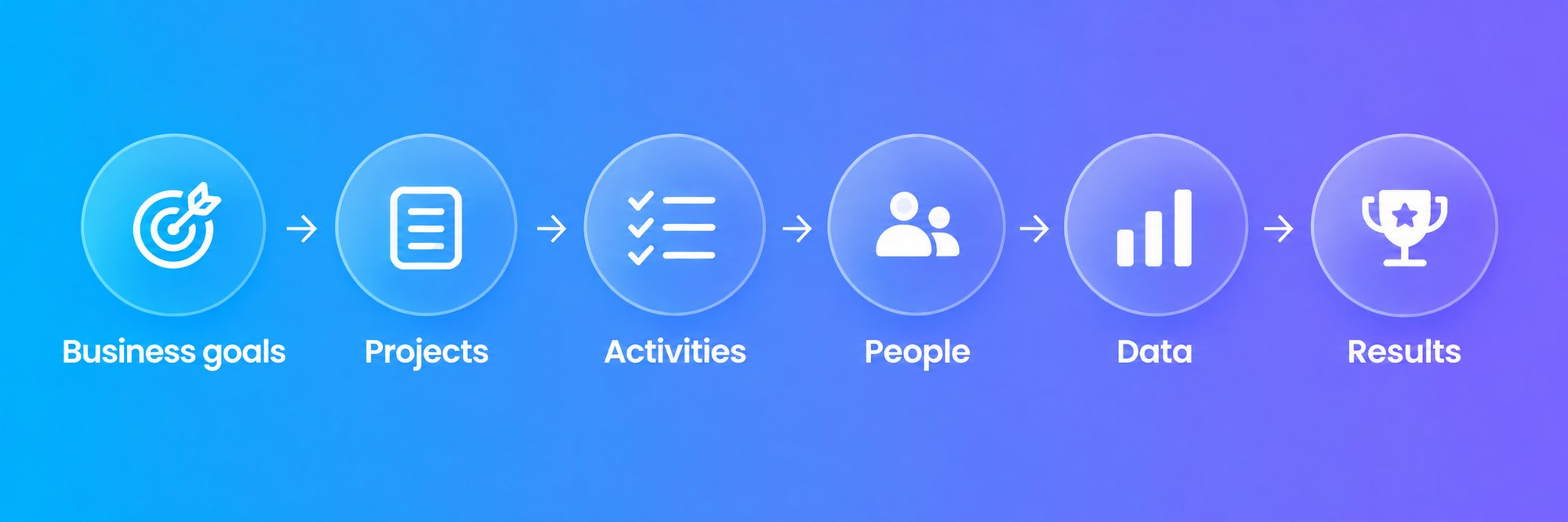
What does it mean to connect daily work to business goals?
Connecting daily work to business goals means linking the activities, projects and decisions that people work on every day to the outcomes the organization is trying to achieve.
For example:
Business goal
Increase active users by 20%.
Instead of managing unrelated tasks such as:
- Improve onboarding
- Contact potential partners
- Publish educational content
- Run user research
- Analyze activation data
you create a relationship between those activities and the goal they are intended to influence.
The structure becomes:
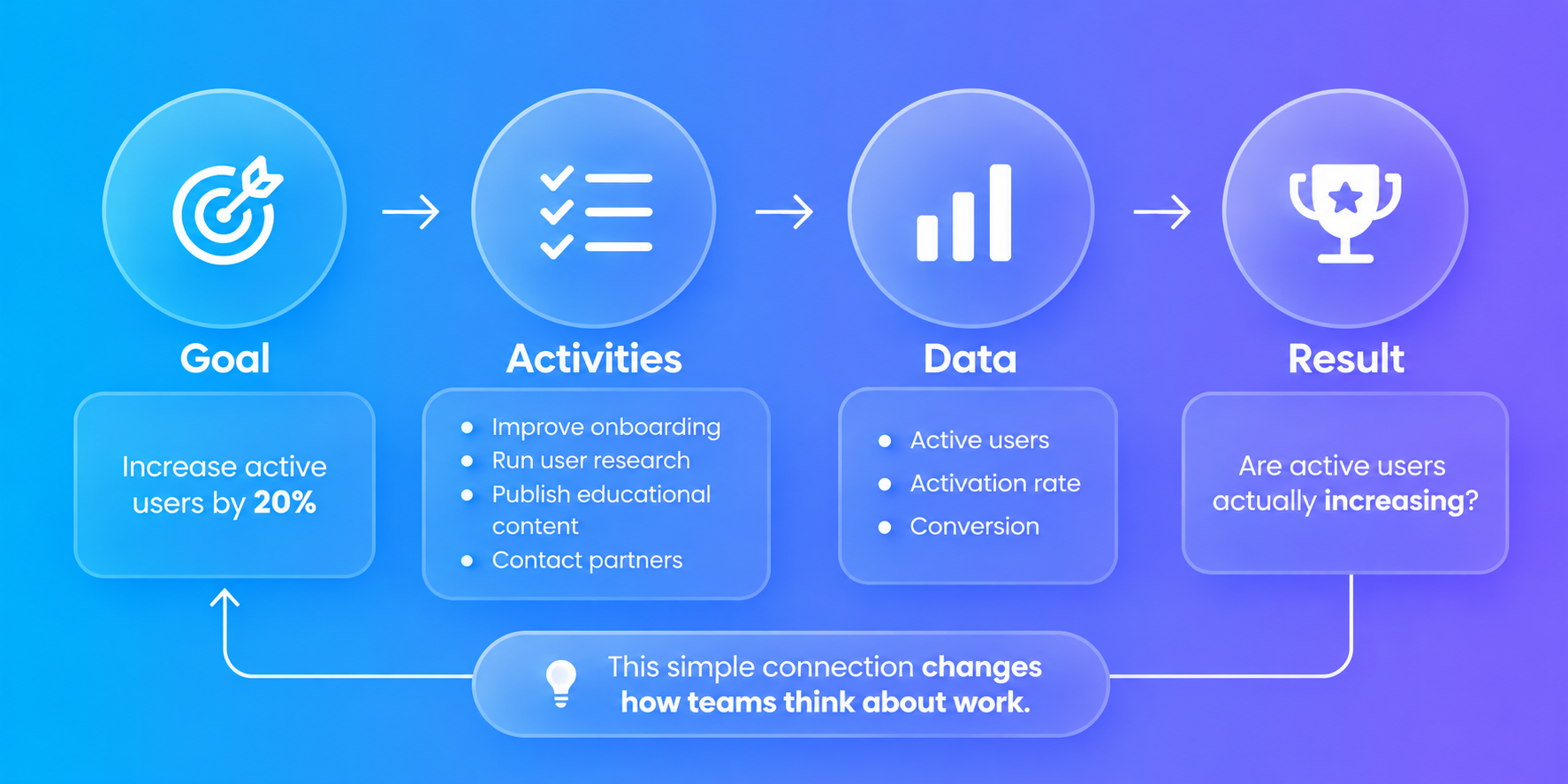
The task is no longer just:
“Do this.”
It becomes:
“Do this because it contributes to this goal.”
Why is connecting work to goals important?
Without a connection between goals and everyday work, organizations can easily end up with a lot of activity but limited clarity.
People may be working hard. Projects may be progressing. Tasks may be completed.
But teams can still struggle to answer:
- What should we prioritize?
- Which work matters most?
- Why are we doing this?
- Which goal does this support?
- Who owns the work?
- Are we making progress?
- How do we know if the work is working?
Connecting work to goals helps turn those questions into a visible system.
Instead of looking at work as a collection of separate tasks, teams can see how individual activities contribute to broader objectives.
1. Start with clear business goals
Before connecting work to goals, the goals themselves need to be clear.
A useful business goal should communicate:
What are we trying to achieve?
By when?
How will we know we achieved it?
For example:
Increase customer retention from 82% to 90% by the end of Q4.
This is much more useful for execution than:
Improve customer retention.
The first version provides direction.
It gives teams something they can connect their work to and something they can measure.
2. Break large goals into manageable objectives
Business goals are often too broad to translate directly into daily work.
For example:
Increase annual recurring revenue.
This is an important business goal, but it does not tell a team what needs to happen tomorrow.
Breaking the goal into subgoals can make execution more concrete.
For example:
Main goal
Increase annual recurring revenue
↓
Subgoals
Increase qualified pipeline
Improve conversion
Increase expansion revenue
Reduce customer churn
Each subgoal can then be connected to specific projects and activities.
This creates a hierarchy between strategic direction and execution.
In Beenia, goals can be structured using parent goals and subgoals, making it possible to break larger objectives into more manageable parts.
3. Connect projects to the goals they support
Projects should not exist independently from the objectives they are intended to influence.
Consider:
Goal
Increase customer retention.
Project
Improve customer onboarding.
Activities
- Analyze onboarding drop-off
- Interview customers
- Redesign onboarding flow
- Test new onboarding experience
- Monitor activation
Now the relationship becomes visible:
Customer retention
→ Customer onboarding
→ Specific activities
This helps teams understand not only what a project is about, but why the project matters.
It also makes prioritization easier.
When a new project appears, you can ask:
Which business goal does this support?
If there is no clear answer, it may deserve further discussion before becoming a priority.
4. Connect individual activities to goals
This is where the strategy-to-execution connection becomes practical.
A task such as:
“Prepare customer onboarding report”
doesn't tell you much by itself.
But if it is connected to:
Goal: Increase customer retention
its context becomes clearer.
The activity now has a purpose.
The same applies to:
- sales activities
- marketing campaigns
- product experiments
- customer research
- operational improvements
- partnership development
- content creation
The goal provides the context.
The activity provides the action.
5. Make ownership visible
Connecting work to goals is not only about structure. It is also about people. Every important activity should have a clear owner.
For example:
Goal Activity, Owner Increase retention, Analyze churn reasons, Customer Success Increase retention, Improve onboarding, Product Increase retention, Create onboarding content, Marketing Increase retention, Interview customers Research
This creates a simple relationship:
Goal → Activity → Owner
Everyone can see:
- what needs to happen,
- who is responsible,
- and what larger objective the work supports.
This becomes especially important when multiple teams contribute to the same goal.
6. Connect goals to measurable data
A goal should ideally be connected to something that tells you whether you are making progress.
There are two useful sources of progress:
Activity-based progress
You can measure progress based on the work being completed.
For example:
80% of onboarding improvements completed.
This tells you how much of the planned work has been completed.
But it doesn't necessarily tell you whether the work created the desired business result.
Outcome-based progress
You can also measure progress using an external business metric.
For example:
Customer retention: 82% → 86% → 89%
Now you can see the actual business outcome.
This distinction is important.
Activity completion tells you what has been done.
Business metrics tell you what has changed.
The strongest execution systems connect both.
Beenia supports goal progress based on activities as well as external data sources such as HubSpot and Google Sheets, allowing teams to connect work with measurable goal metrics.
7. Use KPIs to define what success looks like
KPIs make goals measurable.
For example:
Goal
Grow the customer base.
Possible KPIs:
- New customers
- Conversion rate
- Customer acquisition cost
- Monthly recurring revenue
Or:
Goal
Improve product activation.
Possible KPIs:
- Activation rate
- Time to first value
- Weekly active users
- Feature adoption
The important question is not:
“Which KPIs can we track?”
There are usually plenty.
The better question is:
“Which metrics actually tell us whether we are moving toward this goal?”
This keeps measurement connected to strategy rather than turning dashboards into collections of numbers.
8. Connect meetings to goals and work
Meetings are another important part of execution.
A typical meeting can generate:
- decisions,
- action items,
- new priorities,
- follow-ups,
- responsibilities.
But these actions can easily become disconnected from the goals that created the need for the meeting.
A more connected flow is:
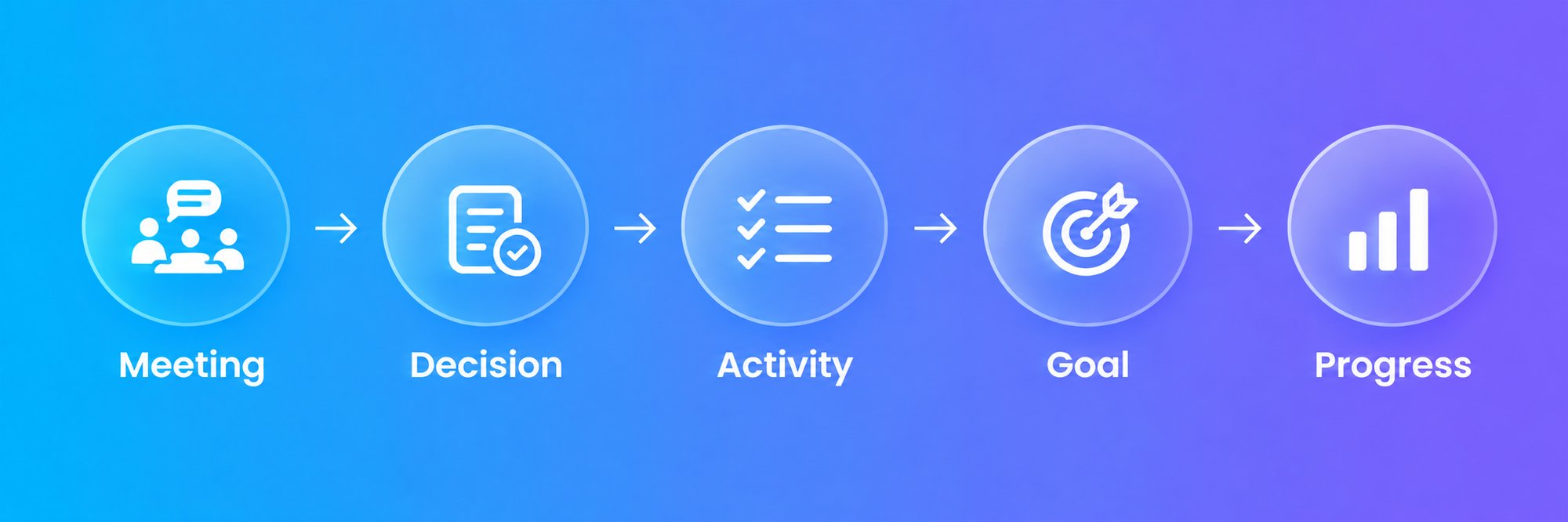
This means a meeting is not an isolated event. It becomes part of the execution process.
For example:
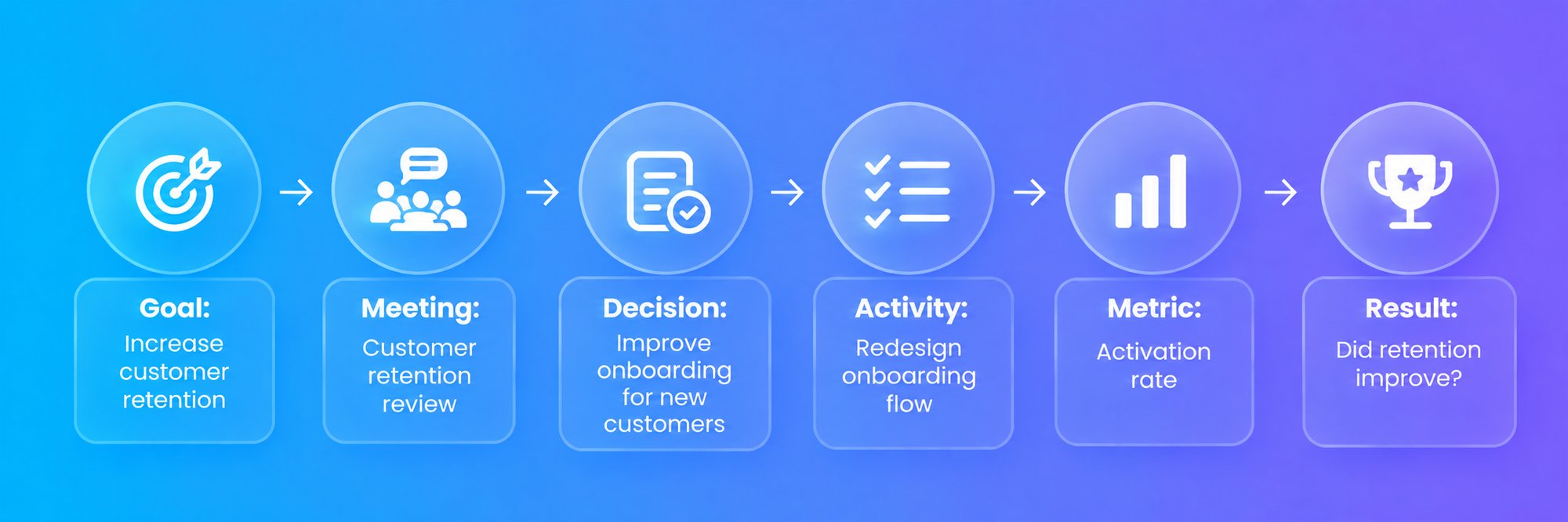
This creates a direct relationship between conversation and execution.
Beenia's meeting functionality is designed to connect meetings with related activities and goals, including agendas, participants, notes, decisions and action items.
9. Connect external data with the work being done
Modern companies often already have valuable data.
It might live in:
- CRM systems
- spreadsheets
- analytics platforms
- financial systems
- marketing tools
- operational databases
The challenge is making that data useful for execution.
For example:
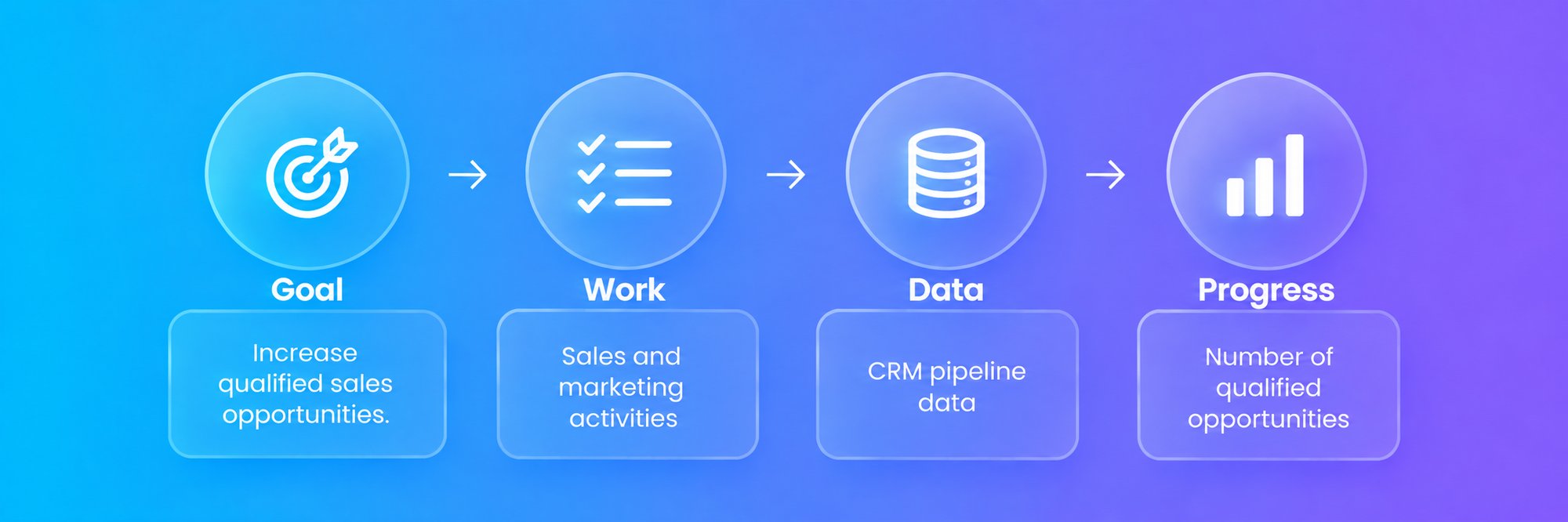
The data provides feedback about whether the work is contributing to the desired outcome.
Beenia can connect external sources such as HubSpot and Google Sheets to goal tracking, allowing goal metrics to be updated from external data rather than relying entirely on manual updates.
10. Automate the connection where possible
Not every relationship between work and goals needs to be maintained manually. Imagine a team creating hundreds of activities every month. If someone has to manually decide which goal each activity belongs to, the process can become time-consuming. Automation can help.
For example:
If an activity matches certain predefined conditions, automatically associate it with the relevant goal.
This creates a more scalable workflow.
Beenia supports rule-based activity matching, allowing teams to define conditions that can automatically connect relevant activities with appropriate goals. Beenia app - shrnuti pro AI asi…
The principle is simple:
The more predictable the relationship, the more it can potentially be automated.
11. Review progress regularly
Connecting work to goals is not a one-time exercise. Goals change. Priorities change. Markets change. Customer needs change. New information appears. That means teams need a regular moment to review:
Are we doing the right work?
Is the work moving the goal forward?
Are the metrics changing?
Should we change our priorities?
This is where goal tracking becomes more than reporting.
It becomes part of decision-making.
In Beenia, goal history and status tracking can be used to visualize progress over time and identify whether goals are on track, at risk or completed.
A simple framework for connecting work to goals
If you want to introduce this approach in your organization, start with this six-step framework:
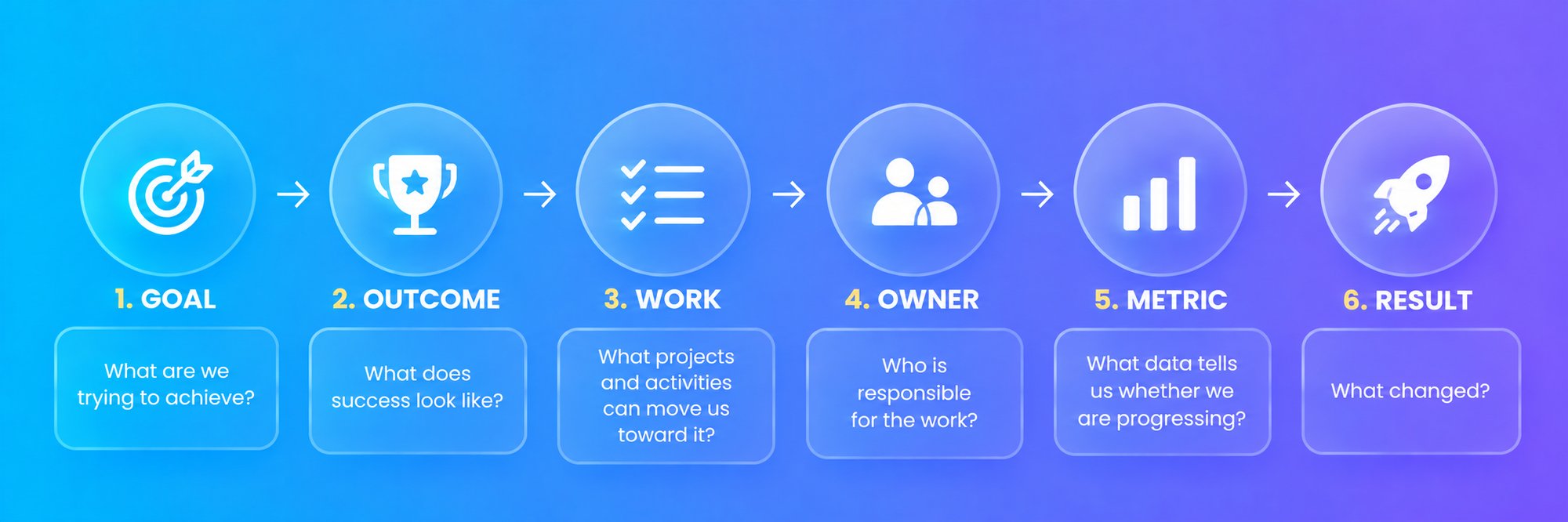
This creates a simple execution chain:
Goal → Work → Owner → Metric → Result
And that chain can be repeated across teams, projects and business priorities.
Example:
From business goal to daily work
Let's make the framework more concrete.
Imagine an agency wants to:
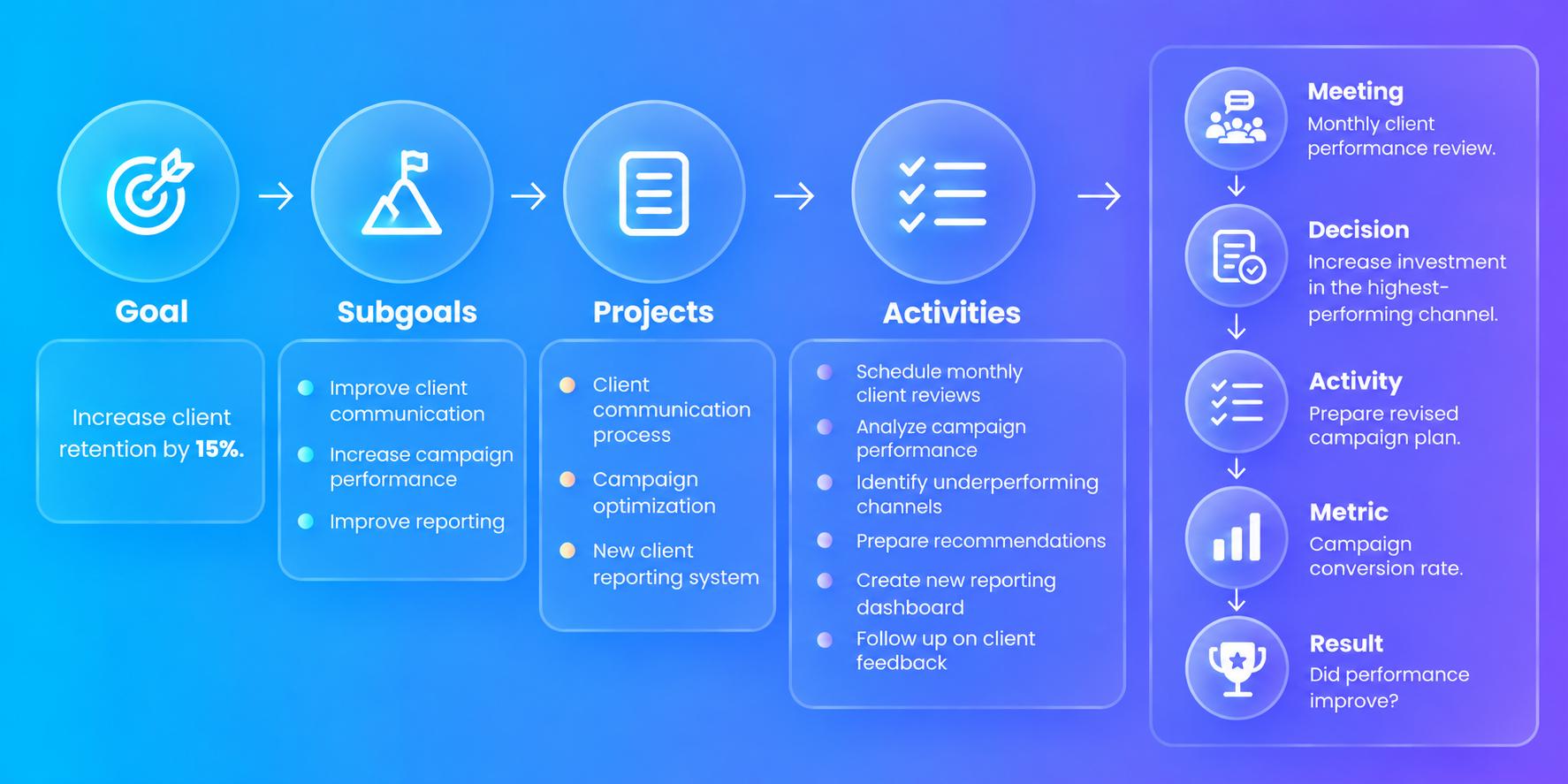
Now the relationship between strategy and everyday work is visible.
What happens when work is not connected to goals?
The opposite model looks like this:
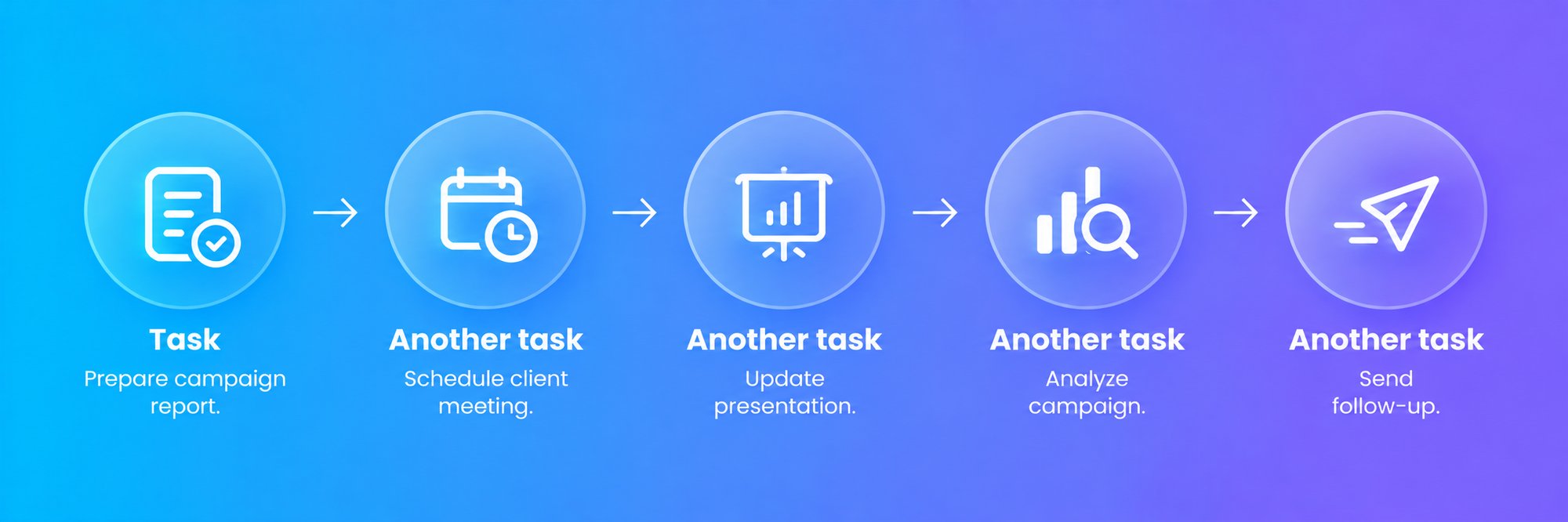
All of these activities may be legitimate.
But without context, the team may not know:
- Which goal they support
- Which activity has the highest priority
- How the activities relate to one another
- What outcome they are trying to influence
- How success will be measured
The team can be extremely busy while still lacking strategic visibility.
Common mistakes when connecting work to goals
Mistake 1: Connecting everything to everything
Not every task needs to be linked to every goal.
If everything is connected to everything, the relationships stop providing useful information.
The goal is meaningful connections, not maximum connections.
Mistake 2: Using too many goals
If a team has twenty equally important priorities, it may be difficult to know what deserves attention first.
Clear prioritization makes goal-based execution more useful.
Mistake 3: Measuring only task completion
Completed tasks are useful information.
But they are not always evidence of business progress.
Whenever possible, combine:
Work metrics
with
Outcome metrics.
Mistake 4: Setting goals without defining success
A goal without a measurable definition of success can become difficult to execute consistently.
Ask:
How will we know we are making progress?
Mistake 5: Setting goals and never reviewing them
A goal is not useful if it is created once and forgotten.
Execution requires regular review.
Mistake 6: Treating meetings as separate from execution
Meetings often contain decisions that change what people need to do next.
Those decisions should not disappear into meeting notes.
Connect them to the actual work.
How to know whether your work is aligned
You can use a simple test.
Take any important activity your team is working on and ask:
Question 1
Which business goal does this support?
Question 2
What outcome are we trying to influence?
Question 3
Who owns it?
Question 4
What metric tells us whether it is working?
Question 5
When will we review the result?
If your team can answer all five questions, the connection between work and goals is relatively clear.
If the answers are difficult to find, that may indicate a gap between strategy and execution.
How Beenia helps connect daily work to business goals
This is one of the core ideas behind Beenia.
Beenia connects goals, activities, projects, meetings, data and people in one environment.
A goal can have:
- a deadline,
- KPIs,
- parent goals and subgoals,
- connected activities,
- external data,
- dependencies,
- progress history.
Activities can then be connected directly to those goals, either manually or through rule-based matching.
Progress can be based on completed activities or external data sources such as HubSpot and Google Sheets. Beenia app - shrnuti pro AI asi…
The result is a connected view of execution:
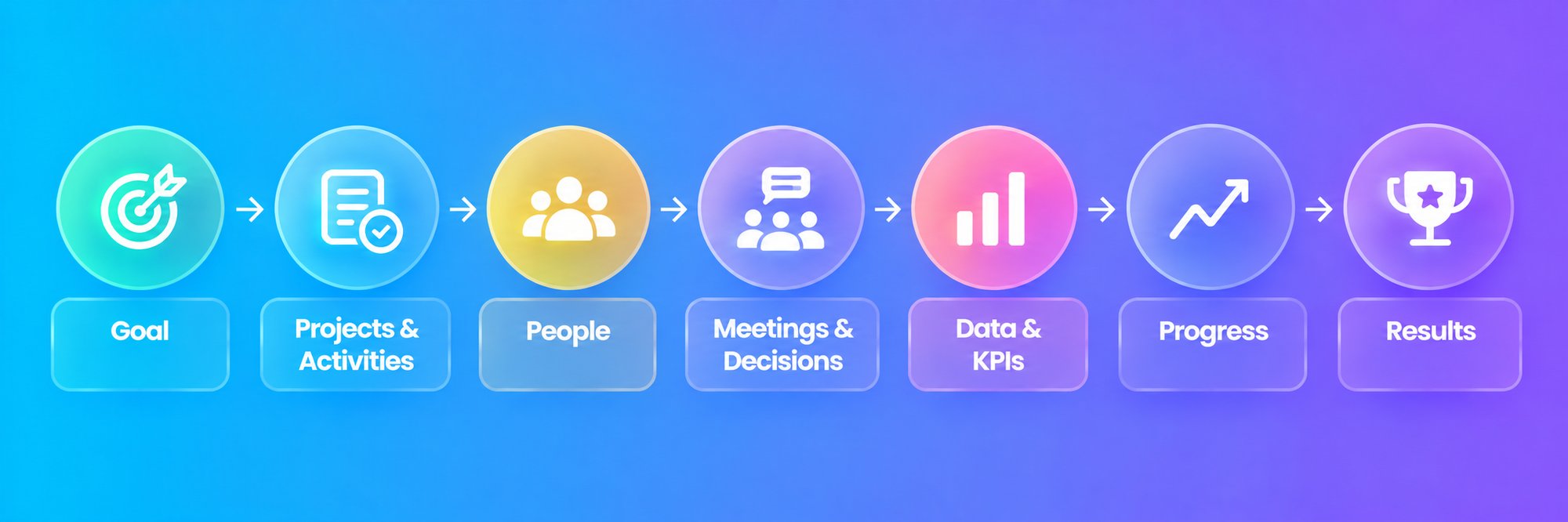
Instead of managing work in isolation, teams can see how everyday execution relates to the objectives they are trying to achieve.
From task management to goal-driven work
Traditional task management often starts with:
What needs to be done?
Goal-driven work starts with:
What are we trying to achieve?
Then:
What needs to happen to get there?
And finally:
How will we know it worked?
This creates a different relationship between strategy and execution.
Traditional approach
Task → Completion
Goal-driven approach
Task → Goal → Metric → Result
The first tells you that work happened.
The second helps you understand why the work happened and what it contributed to.
A practical checklist
Before starting an important project or activity, ask:
☐ What business goal does this support?
☐ What outcome are we trying to influence?
☐ Is the work connected to the right goal?
☐ Who owns the activity?
☐ What KPI or metric will show progress?
☐ Are relevant meetings and decisions connected to the work?
☐ Is relevant external data available?
☐ When will we review the result?
☐ What will we change if the work is not producing the expected outcome?
If these questions become part of your normal workflow, connecting strategy with execution becomes much easier.
Frequently Asked Questions
How do you connect daily work to business goals?
Connect important activities and projects to specific business goals, assign clear ownership, define relevant success metrics and regularly review whether the work is contributing to measurable progress.
How do you align tasks with goals?
Start by defining the goal, then identify the tasks and projects that directly contribute to it. Each important task should have a clear purpose, owner and relationship to the desired outcome.
Why should tasks be connected to business goals?
Connecting tasks to goals gives teams context for their work. It helps people understand why an activity matters, how it should be prioritized and what outcome it is intended to influence.
What is the difference between a task and a goal?
A goal describes what you want to achieve. A task or activity describes what needs to happen to help achieve it.
How do KPIs help connect work to goals?
KPIs provide measurable indicators of progress toward a goal. When work and KPIs are connected, teams can compare the activities they are performing with the outcomes they are trying to influence.
Should every task be linked to a goal?
Not necessarily. The most useful connections are meaningful ones. Strategic or important activities should have clear relationships to relevant goals, while not every minor task needs a direct goal relationship.
How often should teams review goal progress?
The right frequency depends on the goal and the pace of the business. The important principle is to review progress often enough to identify changes, risks and opportunities before they become difficult to address.
How can meetings support goal execution?
Meetings can support goal execution when decisions and action items are connected to the goals and activities they affect. This creates a flow from meeting → decision → activity → goal → result.
Final thought
Connecting daily work to business goals does not mean turning every task into a complicated strategic exercise.
It means giving important work context.
Instead of:
What do I need to do today?
teams can also ask:
What are we trying to achieve?
Why does this work matter?
How will we know it is working?
That creates a simple but powerful connection:
Goals → Work → Data → Results
When that connection is visible, teams can make better-informed decisions about priorities, execution and progress.
Because the objective is not to connect every task to a goal.
The objective is to make the important connections visible.
And once teams can see how their work contributes to the bigger picture, strategy becomes something they can execute — not just something written in a plan.
Beenia — connect work with goals, and turn everyday execution into measurable progress.
.jpg)
.png)
.jpg)